
‘A Man’s Game for All the Family’ – this was the advertising slogan used to promote rugby league by the Rugby Football League in the 1980s. Although the RFL considered it a clever marketing ploy to promote the sport’s toughness whilst emphasising its wholesome, family appeal, the slogan laid bare rugby league’s gendered, physically brutal, masculine nature.
It also did a disservice to the women who, before rugby’s great split in 1895, made vital contributions to rugby league and its communities. Those women, as spectators, volunteers, fundraisers, shareholders, administrators, wives, mothers, and players, helped to keep the sport afloat through war, economic depression and the deindustrialisation of the North of England.
Written by Dr Victoria Dawson, Historian of Women’s Involvement in Rugby league and an Honorary Research associate at University College London.
1984 - the beginnings of the Women’s League
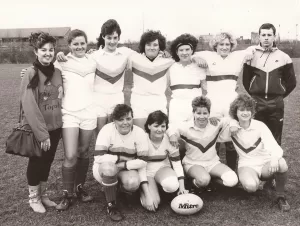 In 1984 women’s teams were starting up in the heartlands of Yorkshire, Lancashire and Cumbria.
Player pathways - County Games
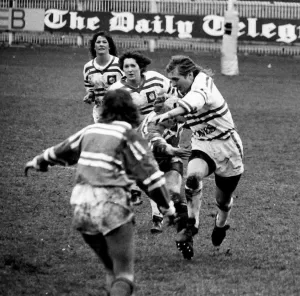 County games between Yorkshire, Lancashire and Cumbria became common in the late 1980s and 1990s.
1989 - beginnings of Internationals
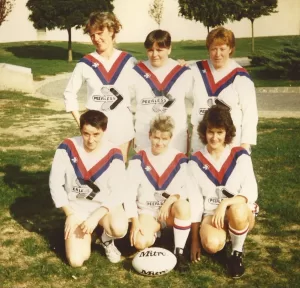 In 1989, the first recorded GB representative team went over to France.
Women and Girls Growth
 League and Cup competitions began to grow, boasting over 30 teams, including a team from London, Fulham Women, schoolgirls teams and some youth clubs.
Match Officials and Coaches
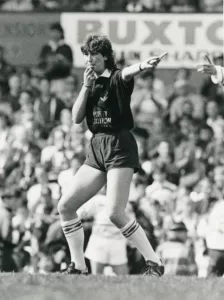 In 1984 Women began to take up officiating, Julie Fizpatrick from Leeds being the first quickly followed by Alison Smith from Widnes and Julia Lee from Hull.
1996 GB Women’s RL Tour to Australia
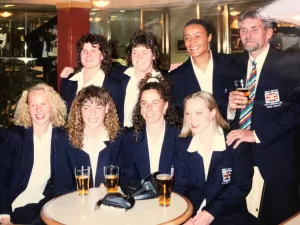 1996 was the inaugural women’s tour to Australia, by this time, the standard of club rugby league was high.
1998 GB Women’s RL Tour to New Zealand
 Two years after their success Down Under, the Lionesses were on tour again, this time to New Zealand.
Development Opportunities
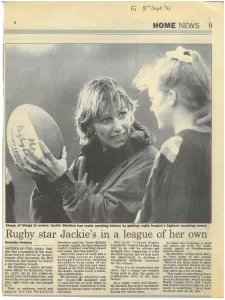 In 2000 the opportunity that an international World Series, which in 2022 was recognized as the first World Cup.
Women’s Rugby League World Series 2000
 With a World Series (World Cup) coming to England, in 2000, the GB Committee understood that hosting a tournament had its own financial challenges.
Further Development
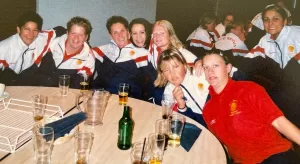 The 2002 tour of Australia saw the Lionesses play three test matches and three representative games.
2003 World Cup in New Zealand
 Nine teams competed in the 2003 World Cup, most of them from the South Pacific islands including two teams from New Zealand.